
The air in Northern New Mexico has a specific scent in the springtime—a crisp, high-altitude cocktail of drying pine needles, warming red rock, and the icy, metallic rush of snowmelt. It is the kind of air that demands you get out of the house, grab a fly rod, and head into the Jemez Mountains.
If you find yourself driving through the village of Cañon, New Mexico, you are at the gateway to one of the most geographically stunning and historically rich corridors in the Southwest. My mission for the day was simple: a four-mile trek up NM376 to scout for Guadalupe River trout fishing access points and to soak in the cinematic shadows of the Gilman Tunnels.
The Gateway: Walatowa and the Road to the Box
Before hitting the dirt and asphalt of the trail, a stop at the Walatowa Visitor Center is a non-negotiable ritual. Located on the Pueblo of Jemez, it serves as the cultural heart of the valley. It’s the best place to pick up maps, learn about the red-rock geology you’re about to witness, and perhaps snag some fresh fry bread for the road.
Leaving the visitor center, you head north toward the community of Cañon. This is where the landscape begins to tighten. The mesas start to lean in closer, and the lush ribbon of the Guadalupe River begins to peek through the cottonwoods. As I parked my Outback and geared up—camera bag over one shoulder, a light daypack over the other—the sound of the river was already a constant, rhythmic hum.
Hiking Through History: The Santa Fe Northwestern Railway
The path up NM376 is more than just a scenic road; it is a ghost of the industrial past. In the early 1900s, this wasn’t a place for weekend hikers or anglers seeking Guadalupe River trout fishing; it was a rugged logging artery.
The Santa Fe Northwestern Railway was carved into these cliffs to haul massive timber from the high country of the Jemez Mountains down to the mills. Imagine the sheer engineering feat of the early 20th century—laying steel tracks through a vertical box canyon using dynamite and sweat. When the logging era eventually faded and the railway was retired, the tracks were pulled, leaving behind a perfectly graded path that eventually became the road we use today.
Walking this route on foot allows you to notice the details that a driver misses: the way the rock face is scarred by old blast marks and the hidden pockets of shade where the river pools deeply against the canyon wall.
Entering the Guadalupe Box
As you hike deeper into the canyon, the walls begin to skyrocket. This is the "Guadalupe Box," a dramatic narrowing where the river and the road are compressed between vertical walls of Precambrian granite and volcanic tuff.
The acoustics change here. The wind whistles through the narrow gap, and the sound of the Guadalupe River shifts from a babble to a roar. For a filmmaker or a photographer, the lighting in the Box is a dream. The high walls create sharp, dramatic shadows that play across the water, making it one of the most photogenic spots in the entire Jemez National Recreation Area.
It’s no wonder Hollywood keeps coming back. From classic Westerns to modern blockbusters like 3:10 to Yuma and Lone Survivor, these cliffs and tunnels have stood in for everything from the lawless frontier to the mountains of Afghanistan. There is a sense of "bigness" here that feels cinematic even when the cameras aren't rolling.
The Gilman Tunnels: A Monument in Stone
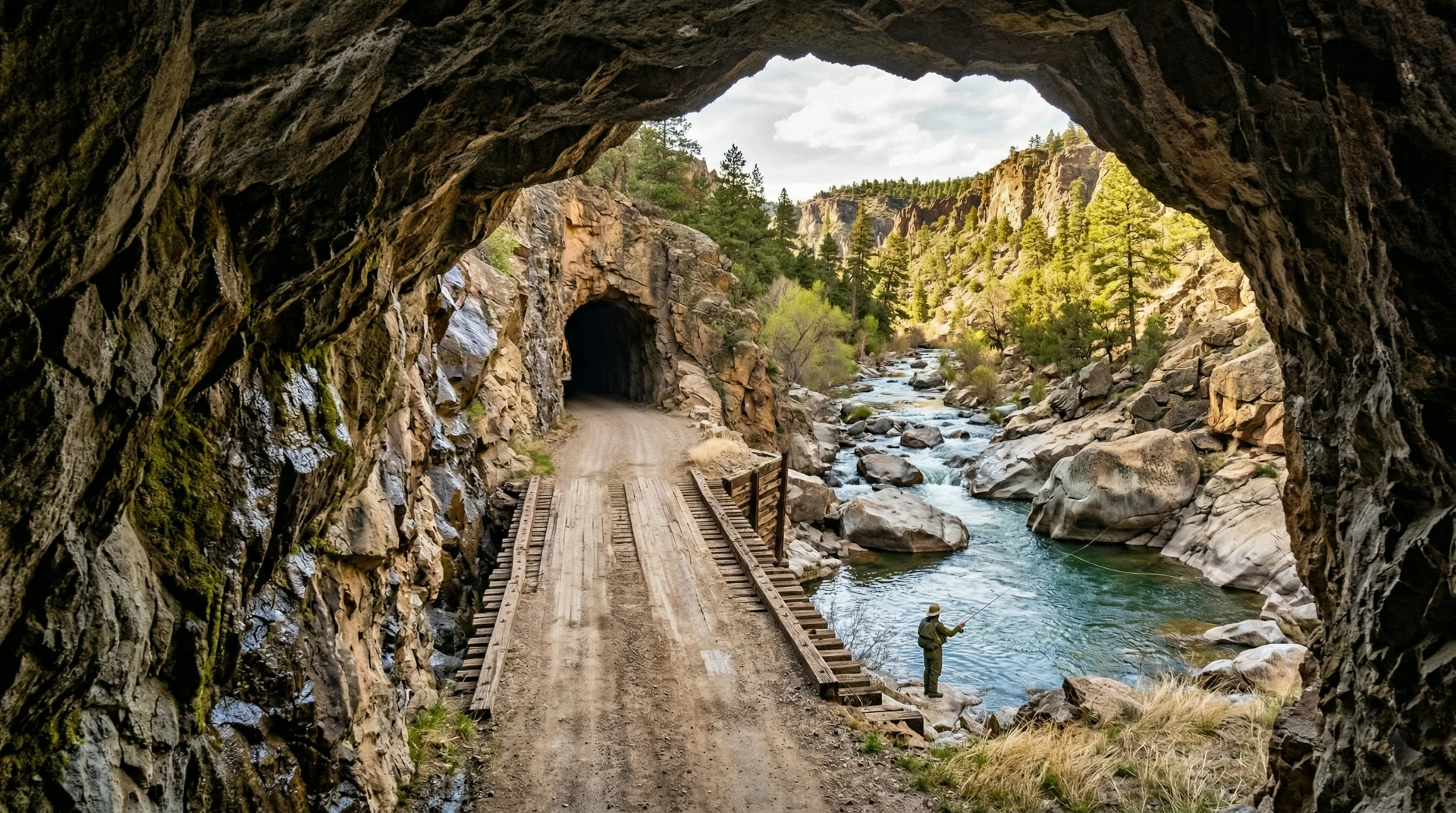
Around the bend, the stars of the show appear: the Gilman Tunnels. These two jagged portals were blasted right through the rock to allow the Santa Fe Northwestern Railway to bypass the most treacherous parts of the canyon.
Walking through the tunnels is an experience in sensory transition. You move from the bright, warm New Mexico sun into a cool, damp, echoing darkness. Water drips from the ceiling, and the scent of old stone fills your nose. When you emerge on the other side, the view opens up into a dizzying vista of the river plunging over boulders hundreds of feet below.
The tunnels represent a bridge between the wild, untouched beauty of the Jemez and the human ambition that sought to tame it. Today, they serve as the perfect frame for the wild Guadalupe River below.
Scouting for Success: Guadalupe River Trout Fishing
While the tunnels are the visual climax of the hike, my eyes were frequently cast downward toward the water. I was here to scout. For those serious about Guadalupe River trout fishing, the stretch above and below the Gilman Tunnels offers a unique challenge and a spectacular reward.
The Guadalupe River is a classic New Mexico mountain stream. It’s not a massive tailwater like the San Juan; it’s an intimate, technical, and incredibly beautiful piece of water. The river is home to a healthy population of Brown Trout, and the New Mexico Department of Game and Fish frequently stocks Rainbow Trout in the more accessible stretches.
As I hiked, I looked for "the three H's": Holds, Hangouts, and Hazards.
-
The Holds: I spotted several deep, turquoise pools just past the second tunnel. In the spring, as the water warms, trout will hold in these deeper pockets to conserve energy while waiting for the insect life to stir.
-
The Hangouts: I looked for undercut banks and large boulders that create "seams" in the current. A well-placed dry fly or a small nymph drifted through these seams is the ticket to a successful day of Guadalupe River trout fishing.
-
The Hazards: Because this is a box canyon, access can be steep. Part of my scouting was finding "angler trails"—those narrow, dirt-scuffed paths that lead from the road down to the water’s edge.
The beauty of fishing the Guadalupe is the variety. You can find flat, meadow-like stretches further up NM376, or you can find yourself boulder-hopping in the heart of the canyon where every cast feels like a leap of faith.
The Jemez National Recreation Area: A Multi-Use Paradise
One thing that strikes you during a four-mile hike here is the sheer scale of the Jemez National Recreation Area. Managed by the Santa Fe National Forest, this 57,650-acre expanse is a playground for anyone who loves the outdoors.
During my walk, I saw a pair of rock climbers eyeing the sheer walls near the tunnels, their colorful ropes a sharp contrast against the red rock. I heard the distant call of a wild turkey, a reminder that this area is a prime spot for hunting—specifically permitted within the recreation area boundaries.
The Jemez Ranger District does an incredible job of balancing these uses. Whether you are there for Guadalupe River trout fishing, elk hunting, or simply a Sunday stroll to see the tunnels, there is a sense of shared stewardship. The area also borders the Valles Caldera National Preserve, a massive volcanic crater that offers even more exploration opportunities just a short drive away.
Springtime Magic on the Guadalupe
Spring is a season of transition in the Jemez. The snow is melting off the high peaks of the Sierra de los Valles, feeding the Guadalupe and the Jemez River. While this can lead to "runoff" (high, murky water), the day of my hike was perfect. The water was clear enough to see the cobble bottom, yet high enough to keep the fish active.
The willows along the banks were just starting to bud with a vibrant, neon green, and the pasqueflowers were beginning to poke through the forest floor. It’s a time of renewal. If you’re planning a trip for Guadalupe River trout fishing, the window between the end of the spring runoff and the heat of mid-July is often the "Golden Hour" of the angling season.
Practical Tips for Your Visit
If you’re planning to follow in my footsteps and head up NM376, here are a few things to keep in mind:
-
Check the Gates: NM376 is often closed during the winter months or during periods of high fire danger. Always check with the Jemez Ranger District before you make the drive.
-
Parking: There is a small parking area just before the pavement ends and the road to the tunnels begins. It fills up fast on weekends, so early birds get the worm (and the fish).
-
Gear for the Hike: Even though it’s an "easy" four-mile hike, the sun at 7,000 feet is unforgiving. Wear a hat, bring plenty of water, and don't forget your polarizing sunglasses—not just for the glare, but to help you spot those Browns holding in the shadows.
-
Fishing Licenses: Make sure you have your New Mexico fishing license and the required habitat stamps. You can get these online or at several shops in the nearby town of Jemez Springs.
-
Leave No Trace: This area is a treasure. Pack out what you pack in. The Gilman Tunnels have stood for a century; let’s make sure they stay pristine for the next one.
The Narrative of the River
By the time I turned around to head back to the Outback, the sun was beginning to dip behind the western rim of the canyon. The light hit the Gilman Tunnels at an angle that made them look like golden gates.
I sat on a flat rock by the river for a moment, watching a small hatch of midges dance over a pool. A small trout rose, a silver flash against the dark water, leaving a perfect ring of ripples that expanded until they hit the canyon wall.
That is the essence of the Guadalupe. It’s a place where history—the iron and steam of the Santa Fe Northwestern Railway—meets the eternal, fluid grace of the river. Whether you come for the "Holywood" views, the history of the logging era, or the quiet, meditative pursuit of Guadalupe River trout fishing, the Gilman Tunnels and NM376 offer a soul-cleansing escape.
Next time you find yourself in Northern New Mexico, don't just drive past. Pull over. Walk the four miles. Listen to the river tell its story through the Box Canyon. You’ll leave with a full camera roll, perhaps a few fish stories, and a much lighter heart.
The Jemez Mountains are calling, and the Guadalupe is waiting. See you on the water.


0 Comments